
In 2026, Diablo 4 no longer needs to argue for its place in the action RPG landscape. The game that once endured a turbulent post-launch period has settled into a clearer identity, shaped by community feedback, seasonal experimentation, and the long shadow of Vessel of Hatred. Originally released on June 6, 2023, across PC, Xbox One, Xbox Series X|S, PlayStation 4, and PlayStation 5, it was developed and published by Blizzard. For players who have not yet stepped into Sanctuary, the current era offers a strange but compelling proposition: a mature live-service title with a massive back catalog of content, a defined expansion, and a frequently discounted base game. The question is no longer whether Diablo 4 is worth trying, but which version of the journey a newcomer should choose.
When Blizzard ran a notable Steam promotion, the standard edition of Diablo 4 dropped by 40% to $29.99—the lowest price it had ever reached at that point. A free trial also ran until August 7, giving hesitant players a temporary visa into Sanctuary. That combination mattered because it lowered two barriers at once: cost and commitment. For a game capable of providing hundreds of hours of play, the discount was less a sale and more a velvet crowbar, prying open the door for skeptics who had been watching from the sidelines.
The caveat remains important in 2026: Vessel of Hatred is a separate purchase. The base game offers the original campaign, the seasonal model, and the broad endgame systems, but the expansion is where the newest chapter of the story and the most distinctive class live. Players who want the full current Diablo 4 experience should budget for both, even if the base game is acquired at a steep discount.
What Vessel of Hatred Changed
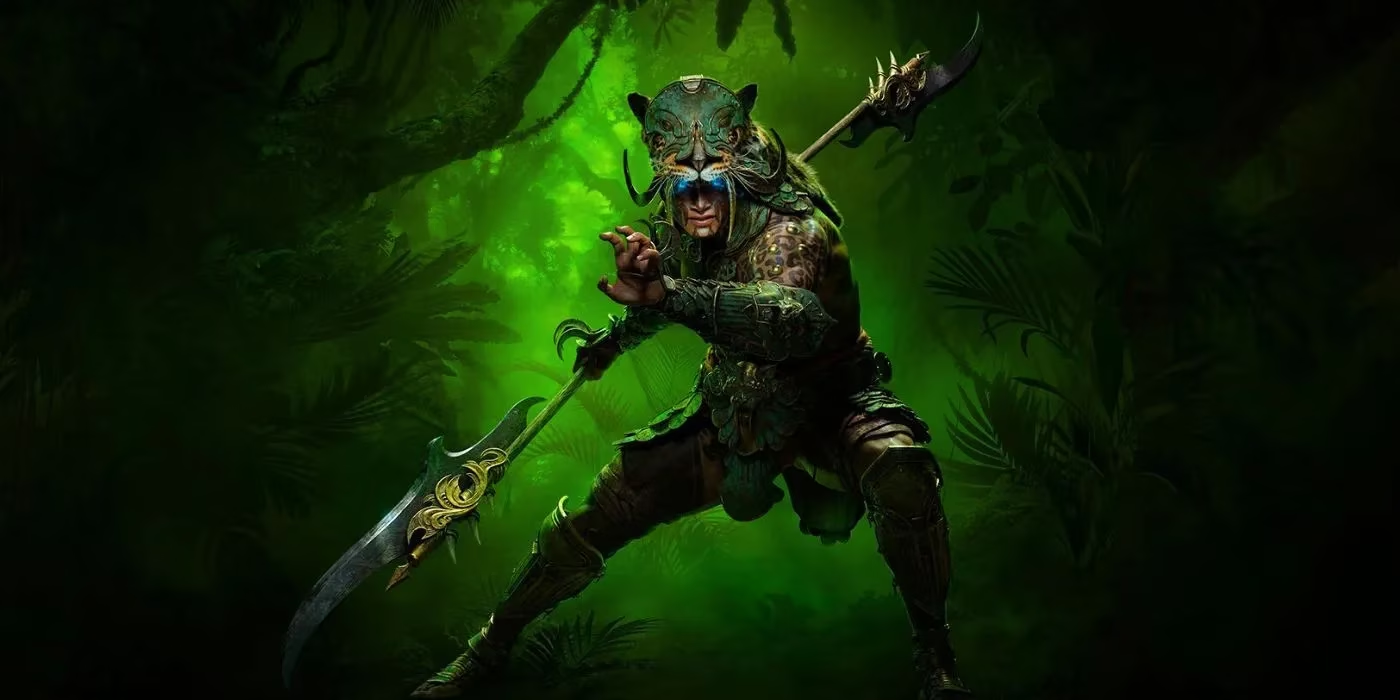
Vessel of Hatred was not a modest add-on. It introduced the Spiritborn, a class that had never appeared anywhere in the Diablo series before. An apex predator of the Nahantu jungle, the Spiritborn channels a connection to ancestral spirits, using that bond to unleash deadly abilities across the battlefield or to stand firm against the most imposing enemies. The class's Spirit Guardians—the Jaguar, Gorilla, Eagle, and Centipede—can be swapped out to gain unique abilities and bonuses. That flexibility gives the Spiritborn a deck-building quality, as if each battle were a tarot reading in which the player chooses which ancestral card to turn face-up.
The result is a class that feels both primal and tactical. It is not simply a new set of animations layered over an old archetype. The Spiritborn changes how players think about mobility, positioning, and resource management, and it gives Diablo 4 a fresh center of gravity. For veterans who had grown accustomed to the original roster, the class is a reminder that Blizzard can still surprise its audience when it commits to a bold idea.
Mephisto and the Theme of Isolation
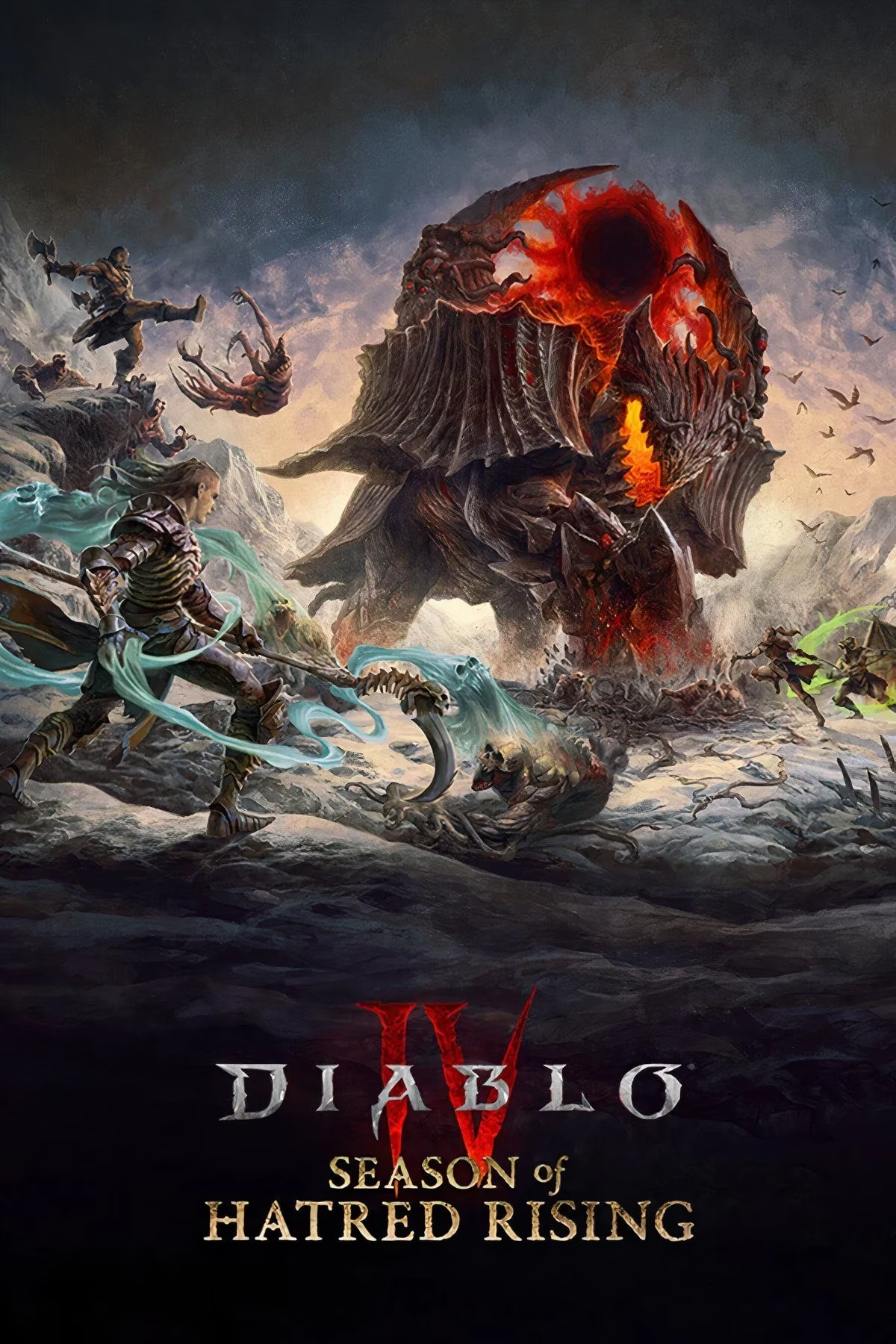
The narrative of Vessel of Hatred is still discussed with some secrecy, but Blizzard has revealed that the expansion focuses largely on Mephisto, the powerful demon entity whose sinister machinations for Sanctuary make him a threat that must be stopped as quickly as possible. Mephisto's influence hangs over the expansion like a second moon: visible to those who know where to look, yet impossible to fully comprehend, and capable of bending the tides of every decision. The expansion is also expected to explore the theme of isolationism and how it negatively affects those who practice it. That thematic choice gives the demon's scheming a political and personal dimension, rather than reducing him to a simple final boss.
In 2026, that focus on Mephisto reads as part of a longer arc. Diablo 4 has always been interested in the cost of resistance, the corruption of good intentions, and the way fear makes communities turn inward. Vessel of Hatred sharpens those ideas by placing them in Nahantu, a region whose jungles and ancestral traditions contrast with the cathedral-heavy gothic imagery of the base game. The expansion does not just add a new map; it adds a new argument about what Sanctuary is and who gets to defend it.
The State of the Game in 2026
The road to this point was not smooth. Diablo 4 endured rocky post-launch content updates, and the community has been vocal when systems missed the mark. Yet the game has found its niche, and its community appears ready to stick with it—provided Blizzard remains responsive to feedback and willing to make changes. That conditional loyalty is healthy for a live-service game. It means the audience is not passively consuming content; it is negotiating with the developer over the game's future.
| Feature | What it offers | Why it matters in 2026 |
|---|---|---|
| Base Diablo 4 | Original campaign, seasons, broad endgame | Frequent discounts make it a low-risk entry point |
| Vessel of Hatred | Nahantu, Spiritborn, Mephisto storyline | Separate purchase that defines the current era |
| Spiritborn class | Ancestral spirit abilities, swappable Spirit Guardians | Adds a new playstyle and build diversity |
| Free trial / promotions | Limited-time access, price cuts | Lowers barriers for hesitant players |
For newcomers, the smartest approach is to treat Diablo 4 as a two-step purchase. First, use a sale or trial to test the base game's rhythm: the campaign, the seasonal loop, the loot chase, and the moment-to-moment combat. If that rhythm clicks, Vessel of Hatred becomes the natural next step. The expansion is not required to understand why people play Diablo 4, but it is required to understand where the game is going.
Blizzard's challenge in 2026 is to keep the momentum from Vessel of Hatred alive without repeating the mistakes of the past. The Spiritborn and Mephisto have given the game a strong thematic spine. The community has shown that it will reward responsiveness. And the price of entry, while no longer the headline it once was, remains one of the most forgiving in the premium action RPG space. Diablo 4 may never be a perfectly smooth ride, but it has become a substantial one—a long, dark pilgrimage through Sanctuary that keeps finding new reasons to take one more step.
That is why the current moment still matters. A 40% discount to $29.99 and a free trial until August 7 were not just marketing beats; they were signals that Blizzard wanted skeptics inside the gates. In 2026, the gates are open, the expansion is part of the conversation, and the only real question is whether players are ready to embrace the power of the jungle—or to resist Mephisto's whisper for another season.
Data referenced from SteamDB helps contextualize why Diablo 4 feels easier to recommend in 2026: deep discount cycles and visibility into price history reinforce the “low-risk entry point” described in the blog, especially when the base game dips well below launch pricing while the separate Vessel of Hatred purchase remains the real gateway to the Spiritborn class and the current Mephisto-driven era.