
As Diablo 4's Season of Witchcraft unfolds in 2026, the community finds itself in a period of transition. Following the monumental release of the Vessel of Hatred expansion in Season 6, Season 7 has successfully introduced captivating new mechanics like Witch Powers, drawing players back into Sanctuary's eternal conflict. However, a notable void persists in the endgame landscape—one that competitive players feel acutely. The conspicuous absence of The Gauntlet and its accompanying Leaderboards, features that had become a staple for measuring prowess since Season 3, has sparked widespread discussion about the direction of Diablo 4's competitive scene. While the seasonal content thrives, this removal marks a significant shift in how players engage with the game's most challenging content.
The Rise and Fall of a Competitive Pillar
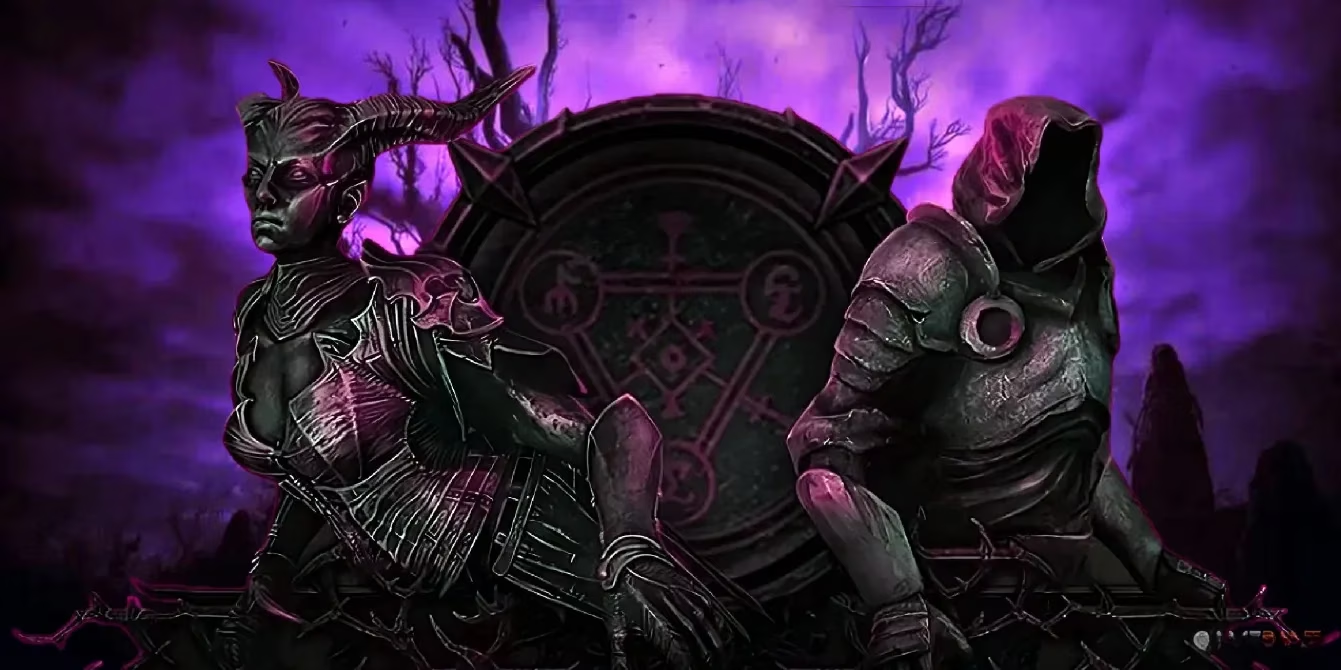
The Gauntlet was, for three seasons, the definitive arena for demon slayers seeking glory. This specialized endgame dungeon presented a unique challenge: annihilate as many foes as possible within a strict eight-minute window. Its appeal lay in its dynamic nature; the layout, enemy compositions, and environmental hazards were reshuffled every week. This design fostered a dedicated community of strategists who would meticulously plan optimal routes, analyze shrine placements, and perfect their execution to climb the global Leaderboards. It became more than just a dungeon—it was a weekly ritual, a test of speed, build optimization, and game knowledge.
However, the feature's journey was not without controversy. Shortly after its debut, a significant exploit emerged, allowing players to carry powerful overworld buffs into the sealed arena, undermining the competitive integrity Blizzard sought to establish. Although this bug was eventually squashed, it exposed a fundamental tension within the mode's design. The Gauntlet's core loop rewarded an immense time investment in learning static, weekly layouts. The most dedicated players could (and would) grind the identical dungeon dozens of times, memorizing every spawn point and elite pack location to shave precious seconds off their run. This created a high barrier to entry, rendering the mode largely inaccessible and unappealing to the average adventurer who simply wanted a fair shot at the leaderboards.
The Official Reasoning and Community Reaction
The feature's initial hiatus coincided with the seismic shifts of Season 6 and the Vessel of Hatred expansion. Developers pointed to the sweeping changes to core systems—the overhauled leveling curve, the revamped Paragon system, and the introduction of the entirely new Spiritborn class—as reasons for temporarily shelving The Gauntlet. The community largely accepted this reasoning, anticipating a triumphant return once the meta stabilized. The confirmation from Community Manager Adam Fletcher that The Gauntlet and Leaderboards would not be returning for Season 7, however, delivered a crushing blow to competitive hopefuls. Worse still, Fletcher's statements suggested the removal might be permanent, with the development team exploring entirely new avenues for implementing competitive rankings in the future.
This news has polarized the player base:
-
Competitive Players: Feel a profound sense of loss. The Gauntlet provided a clear, weekly goal and a tangible way to measure improvement against the world.
-
Casual Players: Are largely indifferent or even supportive. Many found the mode intimidating or viewed the leaderboard competition as dominated by an elite few with excessive time to grind.
-
Analysts & Content Creators: Lament the loss of a consistent source of engaging, strategy-focused content for their audiences.
A Potential Path Forward: Learning from the Past
While the departure of The Gauntlet is disappointing for its fans, it presents Blizzard with a crucial opportunity. The goal should not be to simply reanimate the old system but to reinvent competitive play in a way that addresses its predecessor's flaws. Fortunately, the developers have a rich blueprint to draw from within their own franchise: Diablo 3's Greater Rift Leaderboards.
Diablo 3's system succeeded where The Gauntlet struggled because it was built on a foundation of controlled randomness. Greater Rifts featured:
-
Fully Randomized Layouts: No two rifts were identical, preventing the "solved puzzle" problem of a fixed weekly Gauntlet.
-
Scaling Difficulty Tiers: Players pushed as high as they could, competing on both completion time and the peak difficulty level conquered.
-
A Unified Entry Cost: Rift Keys provided a clear, farmable resource gate for attempts.
This model maintained a high skill ceiling while drastically reducing the advantage gained from pure repetition. Success depended more on adaptable gameplay, robust build crafting, and skillful execution in unpredictable scenarios.
Integrating the Future into Diablo 4's Existing Systems
The perfect vessel for this new competitive vision might already exist within Diablo 4: Nightmare Dungeons. Once the primary endgame activity for farming Paragon Glyph experience, their role has diminished in the post-Vessel of Hatred endgame loop, now primarily serving as a source for Masterworking materials. This presents a golden opportunity for reinvention.
Imagine a new competitive system where Nightmare Dungeons are elevated to a Greater Rift-like status:
| Feature | The Old Gauntlet | Proposed Nightmare Dungeon Leaderboards |
|---|---|---|
| Layout | Fixed weekly layout | Fully randomized each run |
| Objective | Max score in 8 mins | Fastest clear time at highest Tier |
| Accessibility | High barrier (required route memorization) | Lower barrier (tests general skill) |
| Reward Integration | Cosmetic & bragging rights | Could offer Obducite, cosmetics, titles |
This system would leverage the existing Nightmare Sigil mechanics while adding a competitive layer. Players could compete on seasonal leaderboards for the fastest clears of Tier 100+ dungeons, or for the highest tier completed within a time limit. The random affixes and dungeon layouts would ensure no single "optimal route" could be memorized, placing the focus squarely on player skill, build versatility, and in-the-moment decision making.
Conclusion: An End to a Chapter, Not the Competition
The removal of The Gauntlet in Diablo 4 Season 7 is undoubtedly the end of an era for a specific type of competitive play. Yet, it should be viewed not as an abandonment of the competitive community, but as a necessary recalibration. The old system, while beloved by some, had inherent design conflicts that limited its appeal and longevity. By looking to the successful past of Diablo 3 and utilizing the robust, underutilized framework of Nightmare Dungeons, Blizzard has the chance to build a more dynamic, accessible, and sustainable competitive endgame. The Season of Witchcraft has shown the team's capacity for innovation. The hope now is that this innovative spirit will be applied to forge a new legendary challenge where every hero, not just the most hardcore grinders, can have their name etched into the annals of Sanctuary's history.