
I remember booting up Diablo 4 before Vessel of Hatred's launch. I was expecting a new zone, a new class, and a bunch of story beats. What I didn’t expect was how much the base game would shift for every player. The Vessel of Hatred expansion was designed to serve DLC owners, yes. But Blizzard also rebuilt large parts of the core experience, and those changes reached everyone.
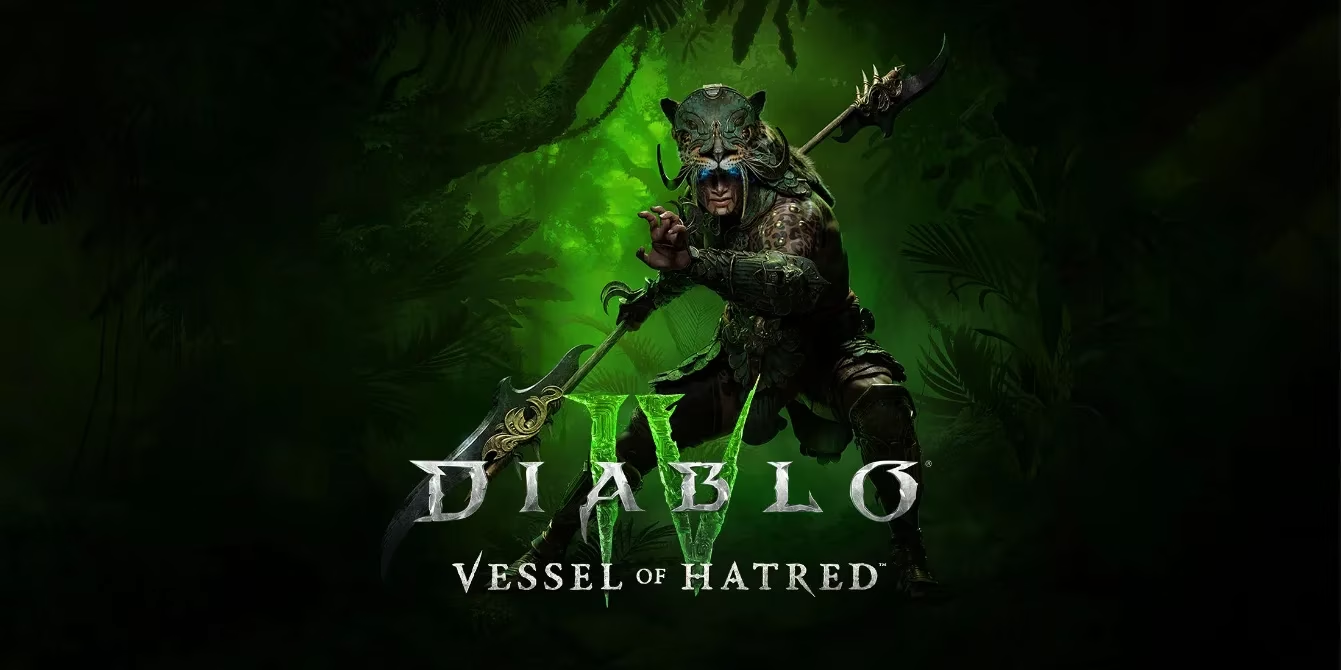
As a player, I found that refreshing. You didn't need to buy the expansion to feel the update. The base game changes were broad. Some felt like quality-of-life fixes. Others completely changed progression.
What changed for everyone
Blizzard listed a huge set of updates. I’ll break them down. These applied to all players, not just DLC owners:
-
New Max Level: 60
-
New Difficulties System
-
New Paragon Max Level: 300
-
Paragon System Changes
-
Item Quality Rework
-
2 New Character Slots
-
New Class Skills and Passives for Each Class
-
New Party Finder Feature
-
New Seasonal Content
-
New Season Rewards — Season Journey, Battle Pass, and Reputation Board
The item quality rework was especially meaningful. Legendaries and uniques felt different. The Paragon changes made endgame progression cleaner. I also appreciated the two extra character slots. If you like experimenting, those slots arrived at the perfect time.
The new difficulty system replaced the old World Tier setup. That was a big shift. It made the climb smoother in my view. Instead of a confusing jump between tiers, the game offered clearer steps. Veterans had to relearn some habits. Newcomers got a more logical path.
Freebies and events
Blizzard didn’t stop with mechanics. All players could log in and claim three free weapons from the in-game shop. That alone was a welcome touch. If you completed the Dark Citadel before November 8, you also earned the Reins of the Longfur Beast cat mount. It was a limited-time reward, but it gave players a reason to group up.
Twitch Drops also returned. From October 8 to November 5, viewers could earn cosmetics by watching Diablo 4 streamers. The schedule was clear. Each week focused on a different class.
| Week | Dates | Class | Twitch Drop Rewards |
|---|---|---|---|
| Week One | October 8–15 | Sorcerer and Necromancer | Ringmaster's Word staff, Wrangler's Hook scythe, Guise of the Grand Vizier, Guise of the Tombkeeper back trophy |
| Week Two | October 15–23 | Barbarian | Competitor's Pride two-handed axe, Guise of the Gladiator back trophy |
| Week Three | October 23–29 | Rogue | Executioner's Reach two-handed bow, Guise of the Eaglecaller back trophy |
| Week Four | October 29–November 5 | Druid | Battlecaller's Crook staff, Guise of the Beastlord back trophy |
There was also a subscription incentive. Gifting or purchasing two Twitch subscriptions to a streamer in the Diablo 4 category granted the Ghost of the Conquered Mount. Four subscriptions unlocked the Glory of the Victor Mount Armor. I saw plenty of players chasing those during the launch window.
Why it mattered
The most surprising part for me was that all of this arrived without requiring the expansion. Blizzard often ties major updates to paid DLC. Here, the base game received a genuine overhaul. That was smart. It gave lapsed players a reason to return. It also kept the community healthy.
In 2026, I still hear players talk about that period as a turning point. The Paragon cap change and item quality rework set the stage for later seasons. The party finder feature became a staple. The seasonal content model kept evolving. Vessel of Hatred was more than a story expansion. It was a reset.
Of course, the expansion itself added the Spiritborn class and the Nahantu region. That content required purchase. But the core systems update didn’t. That distinction mattered. It meant a friend who skipped the DLC could still enjoy the new progression. We could party up. We could chase the same seasonal goals. That was a good design call.
Final thoughts
Vessel of Hatred’s launch day was October 8. It was a huge moment for Diablo 4. Whether you bought the expansion or not, you logged into a different game. The max level moved to 60. Paragon points went to 300. Difficulty felt more readable. Items were reworked. New skills and passives expanded build options. Free weapons, a cat mount, and Twitch Drops sweetened the deal.
I think Blizzard made the right move. Giving base game players a reason to stay kept the ecosystem strong. It also made the expansion feel like an addition, not a mandatory tax. Looking back from 2026, that launch strategy still stands out. If you haven’t touched Diablo 4 in a while, the Vessel of Hatred-era changes are worth exploring. The game you remembered is not the game you’ll play today. And that’s probably a good thing.
Data referenced from SteamDB helps contextualize why a sweeping “for everyone” patch—like the Vessel of Hatred-era level cap, difficulty, and progression reshuffles—can be such a smart move: when core systems become clearer and rewards feel re-tuned, returning-player interest and day-to-day activity tend to follow, reinforcing the idea that base-game overhauls aren’t just quality-of-life updates but ecosystem stabilizers that keep the wider community engaged even without mandatory DLC.