
To understand why Diablo 4: Vessel of Hatred still shapes how players approach Sanctuary in 2026, they only need to look at the corrupted jungle of Nahantu. The expansion pushed past the gothic medieval mood and opened a sunlit, ancient, and deeply dangerous region that ties back to Diablo 2. The Spiritborn became an immediate conversation starter, four Mercenaries started plugging gaps in solo builds, and the new dungeon systems gave groups a reason to coordinate beyond simple damage checks. Some players may wonder whether the expansion is still relevant after multiple seasons. The answer is yes, because many of its systems have become the foundation for modern endgame play.
Mercenaries: Plugging The Weak Spots
Mercenaries are not just cosmetic companions. Each one has a skill tree, and players unlock new abilities by earning rapport while adventuring together. Raheir, the Shieldbearer, is the first Mercenary players meet, and he works like a walking safe zone. If a sorcerer is a glass cannon with high damage and low defense, Raheir can step in with his shield when incoming damage spikes. The choice is not random; it is meant to fix a specific weakness.
Subo, the drunken archer, offers ranged pressure for melee characters who want arrows falling while they swing. Aldkin, the Cursed Child, is the magic-focused option. A fire sorcerer can push Aldkin down the fire side of his tree instead of the shadow side and create an elemental synergy. Varyana, the ex-cannibal barbarian, brings a kill-streak perk that feels like a throwback to Diablo 3. When she is active, she tracks kill streaks, and while the streak continues, movement speed and attack speed increase. Can a player keep it going indefinitely? The system rewards exactly that kind of route planning.
| Mercenary | Role | Best For |
|---|---|---|
| Raheir | Shieldbearer tank | Fragile builds that need protection |
| Subo | Drunken archer | Melee builds wanting ranged support |
| Aldkin | Cursed Child magic user | Elemental synergy, especially fire or shadow |
| Varyana | Barbarian | Kill-streak speed and momentum |
There is also a reinforcement system. A Mercenary can be set to appear situationally rather than follow constantly. The developers compared it to having different tools on a belt. A boss fight might call for a shield intervention, while open-world farming might call for Varyana's speed boosts. The Mercenaries also know each other. They have small flavor conversations and comments about the world, which makes the hideout feel less like a lobby and more like a place where characters exist even when the player is not around.
Spiritborn: A Jungle-Born Hybrid
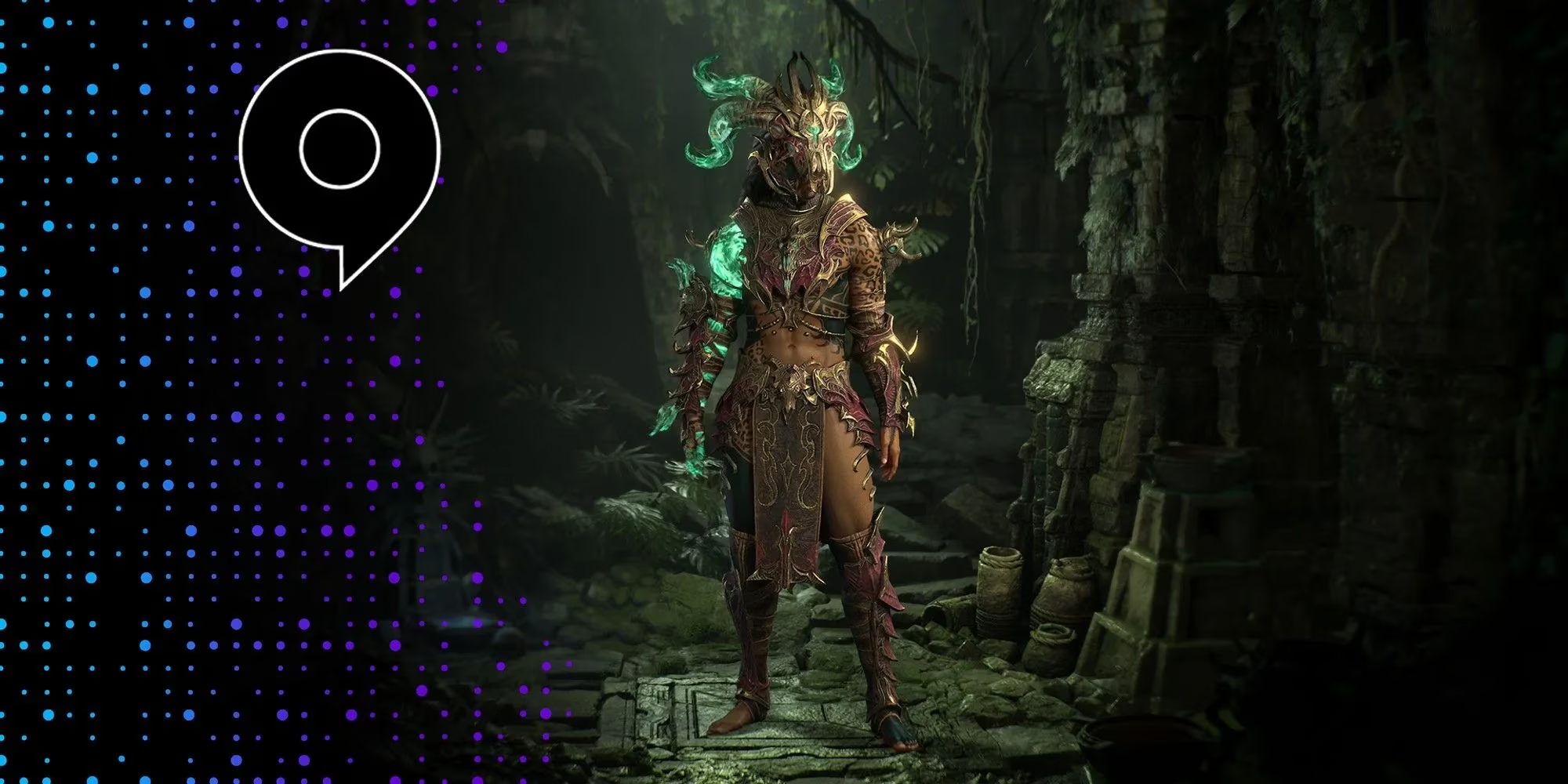
The Spiritborn was designed to fit the region. Instead of being another knight or traditional spellcaster, it pulls from martial arts, spirit magic, and elemental attacks. Developers described it as an anti-necromancer because of how it flips the summoner fantasy. The Spiritborn does not command the dead; it channels spirit guardians from the jungle.
The class uses a Spirit Hall system that lets players choose a primary spirit and mix it with another. A jaguar-jaguar setup leans into speed and fire. A jaguar-centipede setup can combine quick movement with poison pressure. What if someone cannot decide between burst and control? That is where the hybridization becomes useful. The eagle is tied to lightning, the centipede to poison, and the jaguar to fire, giving players several archetypes to combine. This flexibility made the class attractive to players who enjoy build experimentation more than following one fixed rotation.
Nahantu, Kurast Undercity, And The Dark Citadel
Nahantu is the jungle realm first seen in Diablo 2, but Vessel of Hatred gives it a stronger narrative purpose. Neyrelle is carrying Mephisto's soul stone back to Kurast, creating a full-circle moment for the story. The location also provides visual contrast. Instead of dark stone corridors, players see sunlight through the canopy, red plains, and corrupted ancient growth. New monster families such as the Hollows and Dregs feel native to the region, while returning Lacuni provide a familiar threat.
The Kurast Undercity is a time-attack dungeon built around Tributes. Players place a Tribute before entering to shape the challenge and the reward. Killing elite-equivalent enemies adds time to the clock, while staying attuned increases the reward multiplier. The tension is simple: push the multiplier too high and risk running out of time, or play safe and leave loot on the table.
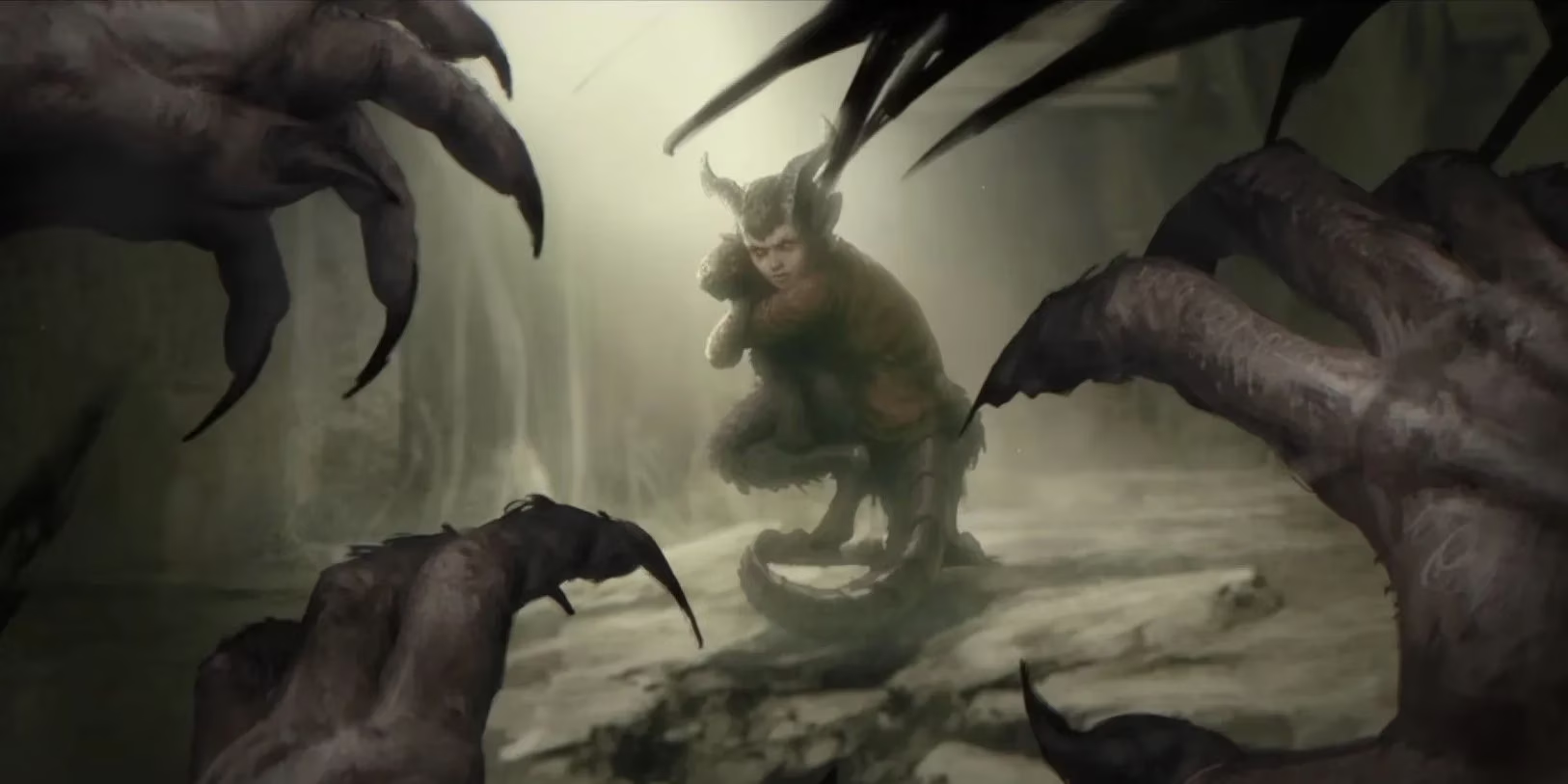
The Dark Citadel is a cooperative endgame dungeon with three wings. Each wing has its own mechanical flavor, but the goal was never to slow combat down with waiting puzzles. The developers learned from previous trap-heavy seasons that players dislike standing around while fire moves away. Instead, the Citadel asks groups to communicate, split roles, and keep fighting. Completing all three wings opens a final boss. The lore connection to the ancient Goatmen also gives the dungeon a place in Sanctuary's history rather than feeling like a random arena.
Party Finder And Other Quality-Of-Life Wins
One of the more useful additions was Party Finder. It is accessible from the social menu, the remote wheel, and directly from the map. A player standing at a Nightmare Dungeon can list a group with one button press. Need a specific wing of the Dark Citadel? The system can tailor that too. Players can even signal whether they want to carry or be carried. That level of honesty keeps group expectations clear.
As of 2026, many players may take some smaller changes for granted. The ability to set a favorite town or waypoint means the town portal no longer dumps them at the nearest capital city. That is a small feature, but it smooths out daily play. The season six progression overhaul also changed how leveling, Paragon, and difficulty tiers work for all players, not just expansion owners. The result is a loop that respects a player's time more than the original launch did.
The expansion might have seemed like a pile of separate features at first. In practice, they connect well. Mercenaries shore up a build, Spiritborn lets players chase a fresh power fantasy, and the new dungeons give that power somewhere to go. For anyone still asking whether Vessel of Hatred is worth revisiting in 2026, the better question is whether their current build can handle the jungle without it.