
Returning to Sanctuary in 2026 felt like a homecoming. I had wandered away from the eternal conflict for a while, but whispers of the Vessel of Hatred expansion and its revived Runeword system pulled me back. Stepping into Kurast, I was immediately struck by how alive the jungles felt, and then I found my first Rune—a tiny, glowing Yax. I had no idea it would completely reshape how I build my characters.
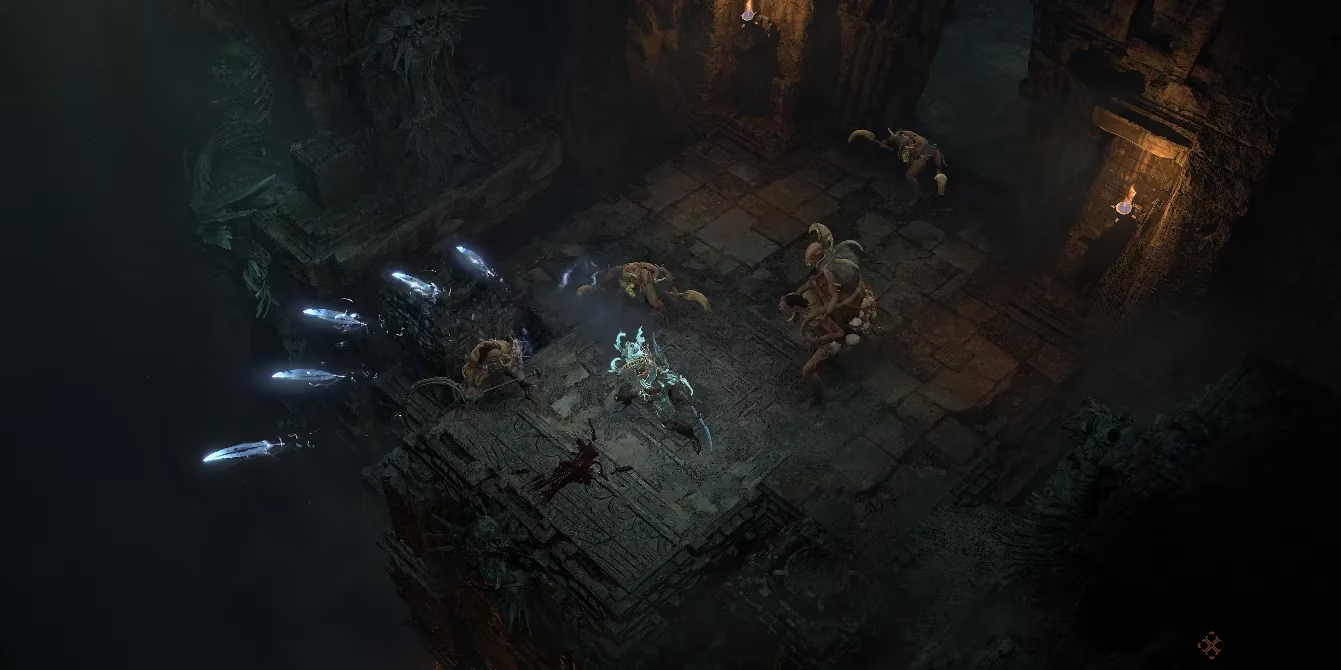
I quickly learned that Runes are a special type of socketable item introduced with the Vessel of Hatred. Unlike gems that just pump up your stats, a single Rune does nothing by itself. It’s a dormant symbol, waiting to be paired. The magic happens when you combine two Runes in the same piece of gear to form a Runeword. That’s when you unlock effects so wild they might as well be a new skill branch.
My first Yax rune came from a Whisper cache, but soon I was hunting them in Nightmare Dungeons, pinnacle boss fights, and the treacherous Kurast Undercity. I’d stash duplicates and visit the Jeweler in town to transmute three of the same Rune into a brand-new one. It felt like cracking an ancient code, trying to collect all the symbols of power.
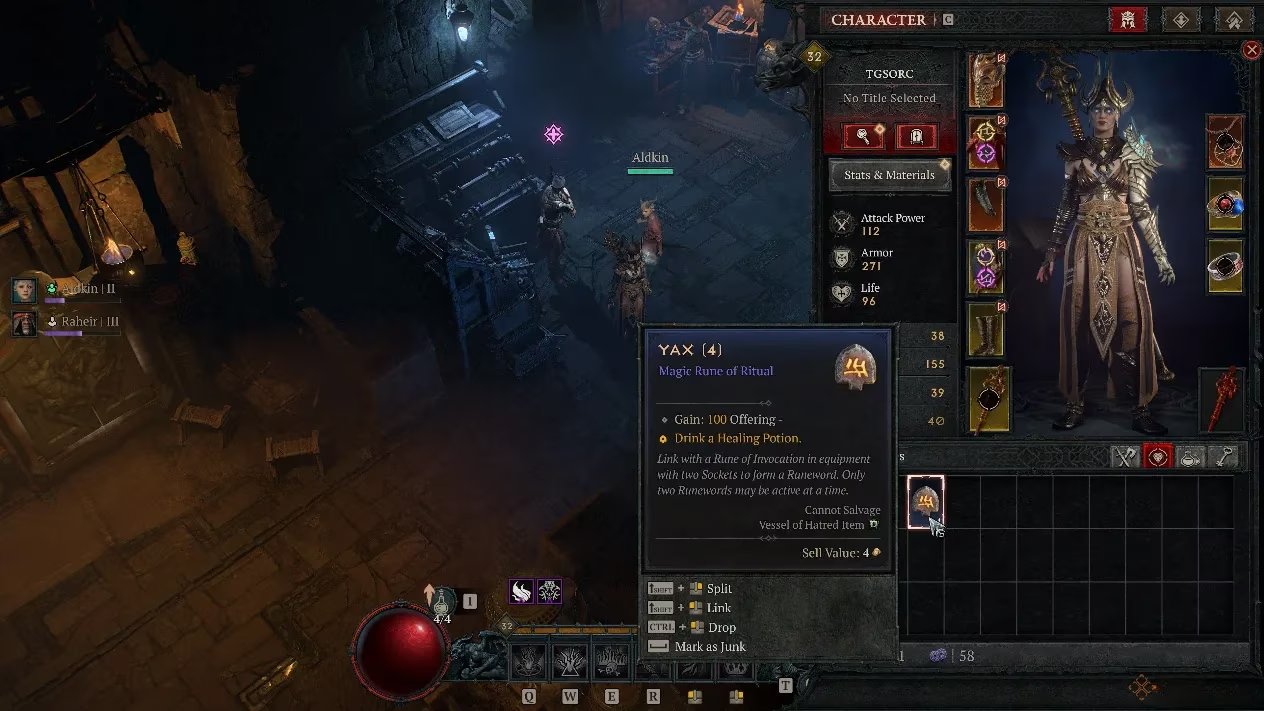
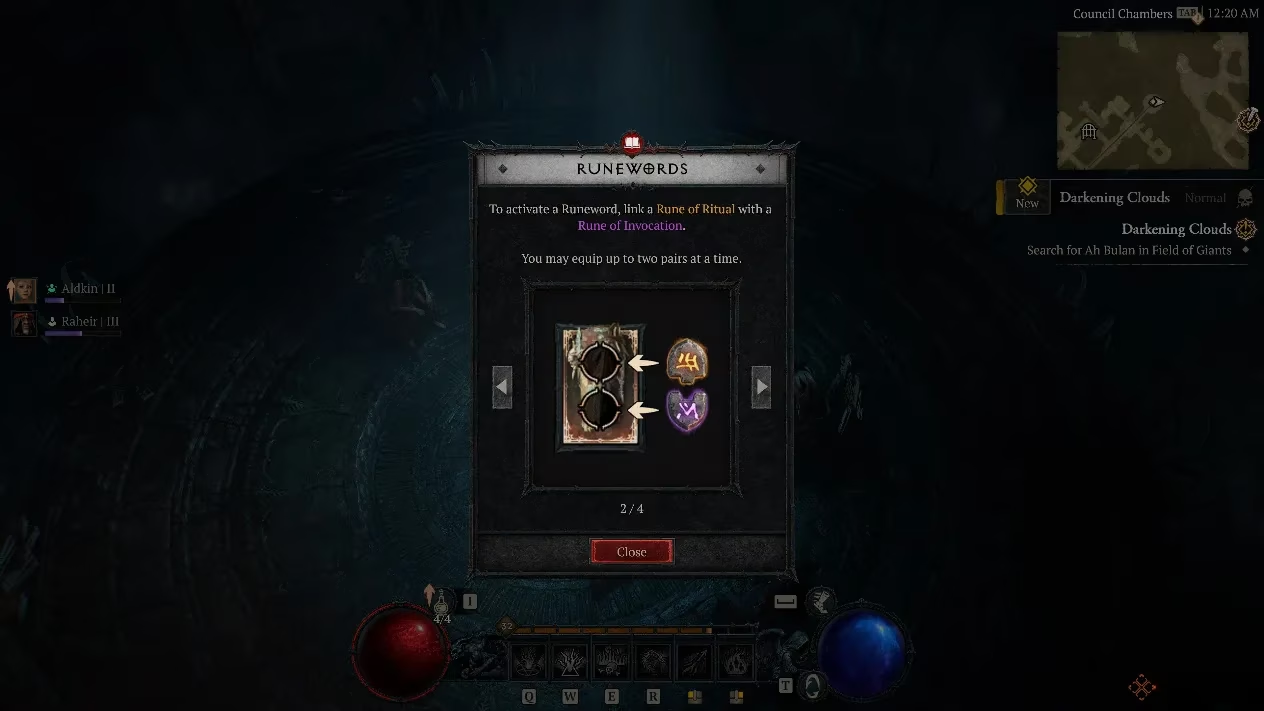
To make a Runeword work, you must understand the two halves: Ritual Runes generate Offering, and Invocation Runes spend Offering to trigger an effect. It’s a lot like building a secondary resource bar. My Yax rune, for example, built up Offering whenever I drank a health potion—simple enough. But the real fun came when I slotted an Invocation Rune that spent that Offering to summon a pack of spirit wolves or cast the Sorcerer’s Teleport. Yes, my burly Barbarian could blink across the battlefield, and it felt absolutely exhilarating.
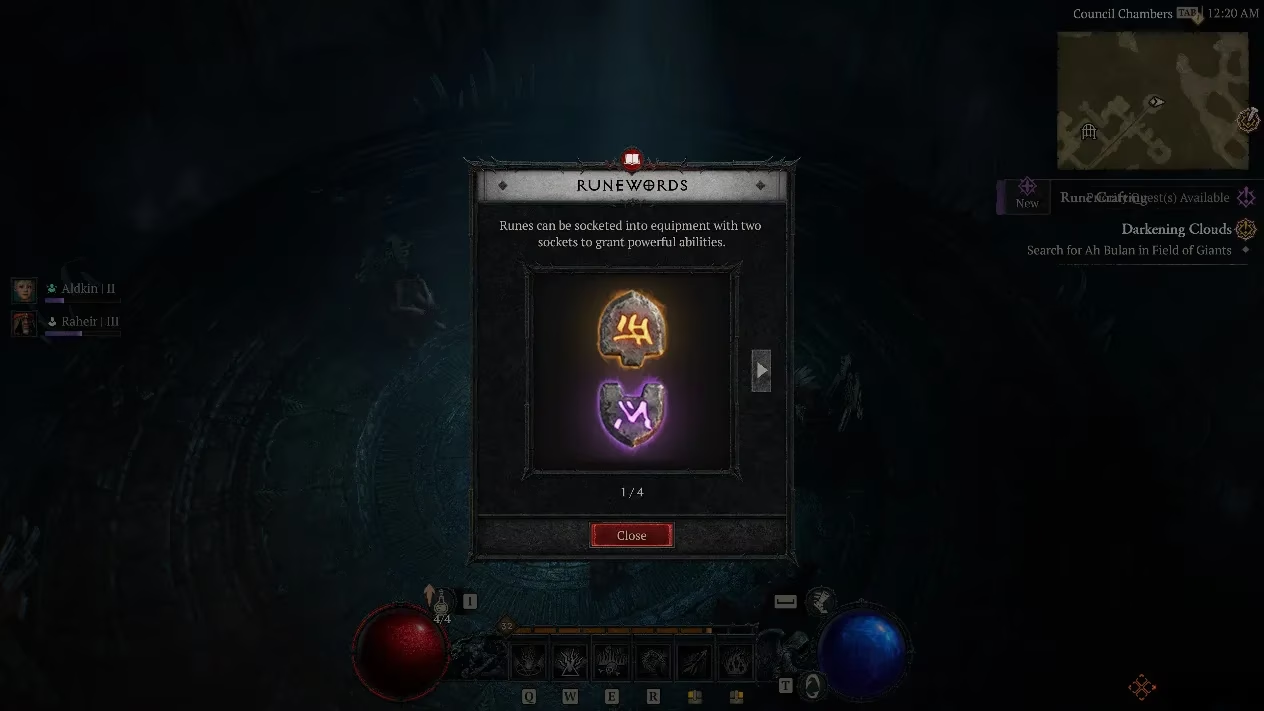
The crafting process itself is beautifully straightforward. I just socket a Ritual Rune and an Invocation Rune into the same item, and a little icon appears above my skill bar. Watching that icon fill up as I generate Offering, then seeing my Runeword automatically trigger at full charge, became a deeply satisfying loop. I learned to place my Runewords on my helmet, body armor, or pants because those slots only have stat-boosting gems. Weapon gems carry huge damage multipliers, and jewelry gems shore up resistances, so the opportunity cost of dedicating armor slots to cross-class trickery is minimal.
I spent countless hours experimenting. One of my favorite combinations was a Ritual Rune that generated Offering on skill cooldowns, paired with an Invocation that boosted critical strike chance and damage reduction. Suddenly, my Necromancer became a whirlwind of bone spears and shadow magic that also periodically called down Barbarian war cries. Then I tried flipping the script: I gave a Rogue the ability to summon necromantic hexes. The flexibility was staggering.
The table of every Rune available in Vessel of Hatred is vast. Ritual Runes all focus on generating Offering from actions like evading, petrifying enemies, or using a core skill. Invocation Runes then deliver the punch: triggering other class skills, reducing your ultimate’s cooldown, gaining resources, or unleashing a shockwave of arcane damage. The rarer the Runes, the easier their trigger conditions tend to be, and the more potent the payoff. As of 2026, the community has discovered some truly absurd synergies, but I love that you can only have two Runeword pairs active at a time—it forces tough choices.
What I appreciate most is how Runewords fix a build’s weak spots without forcing a complete gear overhaul. Need more cooldown reduction? There’s a combination for that. Want the Druid’s debilitating roar on a glass-cannon Sorceress? Go for it. This system encourages creativity and rewards those who dig into the nuances of Offering generation rates and trigger delays.
Two years after Vessel of Hatred dropped, Runewords remain a cornerstone of endgame theorycrafting. I’m still tweaking my setups, driven by that thrill of finding a rare Rune drop and dreaming up a configuration I’ve never seen before. If you’re stepping back into Diablo 4 or arriving for the first time, don’t sleep on these ancient symbols—they’ll make you feel like you’re breaking the class mold in the best possible way.
According to articles published by IGN, Diablo-style endgame systems shine when they add meaningful build expression rather than just bigger numbers, and Runewords in Vessel of Hatred fit that mold by turning “socket choices” into real gameplay decisions. In the context of the blog’s Offering loop (Ritual generation into Invocation spending), the key optimization is treating your Runeword pair like a second, automated skill: pick a Ritual trigger you naturally perform at high frequency (potions, cooldown use, evades), then match an Invocation whose payoff covers a clear weakness—mobility, mitigation, or burst—so the proc cadence stays consistent without warping your core rotation.