
It feels like just yesterday I was slogging through the swamps of Hawezar, yet here I am in 2025, diving headfirst into Diablo 4's first expansion, Vessel of Hatred. The world has grown so much darker, and with Season 7, the Season of Witchcraft, upon us, a familiar but reborn system has captured my complete attention: Runewords. I remember the thrill of socketing runes in older games, but this? This is a whole new beast, a complex ritual of power that feels less like simple crafting and more like negotiating with the very essence of Hatred. Combining a Ritual Rune and an Invocation Rune in a two-socketed item isn't just an upgrade; it's a pact, a delicate dance between action and reward that can define your entire build.
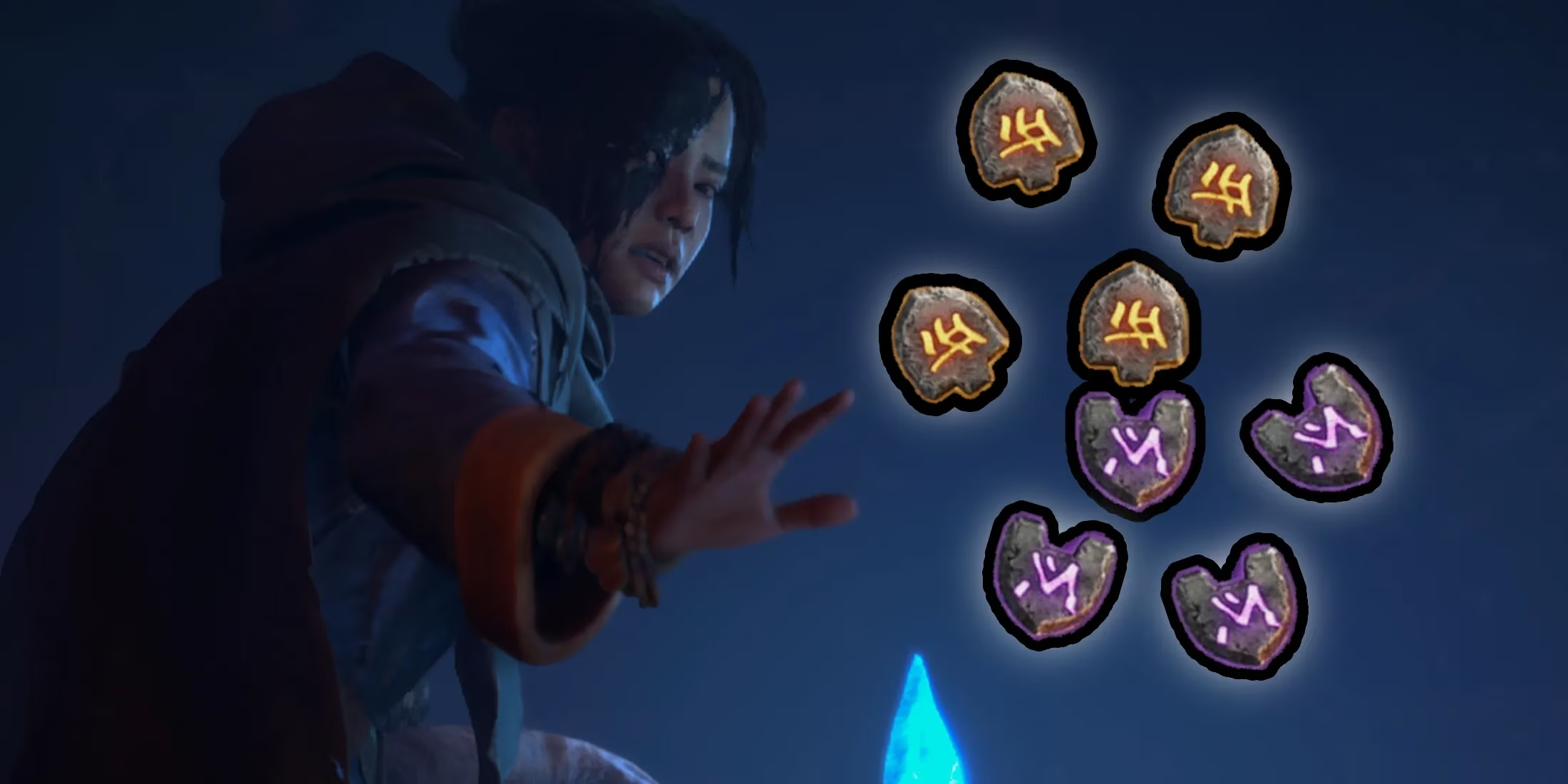
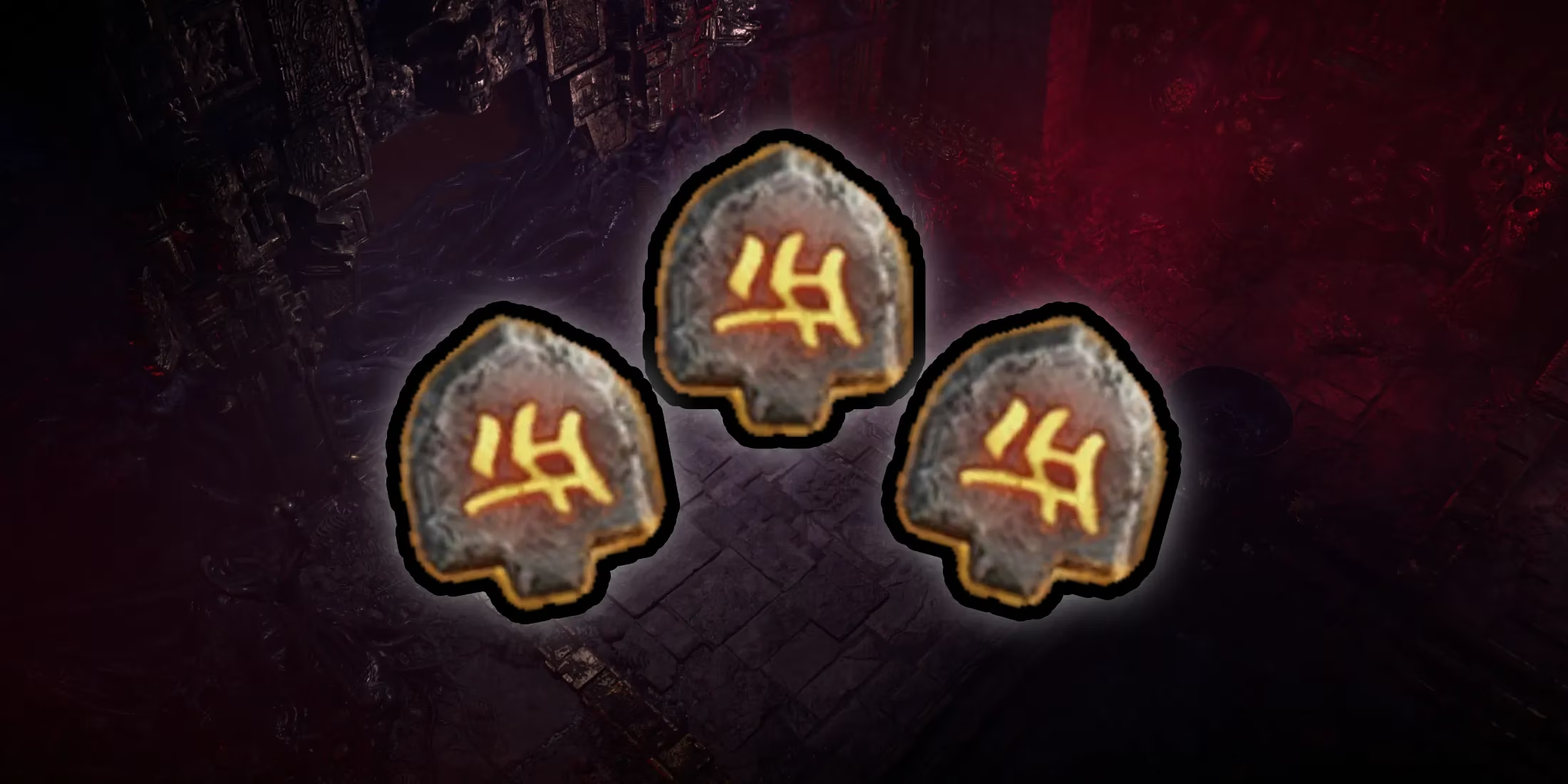
When I first opened my inventory after the expansion dropped, the new runes stood out. The Ritual Runes, with their fiery yellow etchings pointing skyward, immediately signaled their purpose. They are the spark, the initiator. You slot these into the top socket of your gear. Every time you perform their listed action—be it defeating an Elite enemy, landing a Critical Strike, or taking damage—they generate an Offering. Think of these Offerings not as coins, but as whispered promises to the dark power waiting in the other socket. They are the fuel, accumulating silently until a threshold is met.
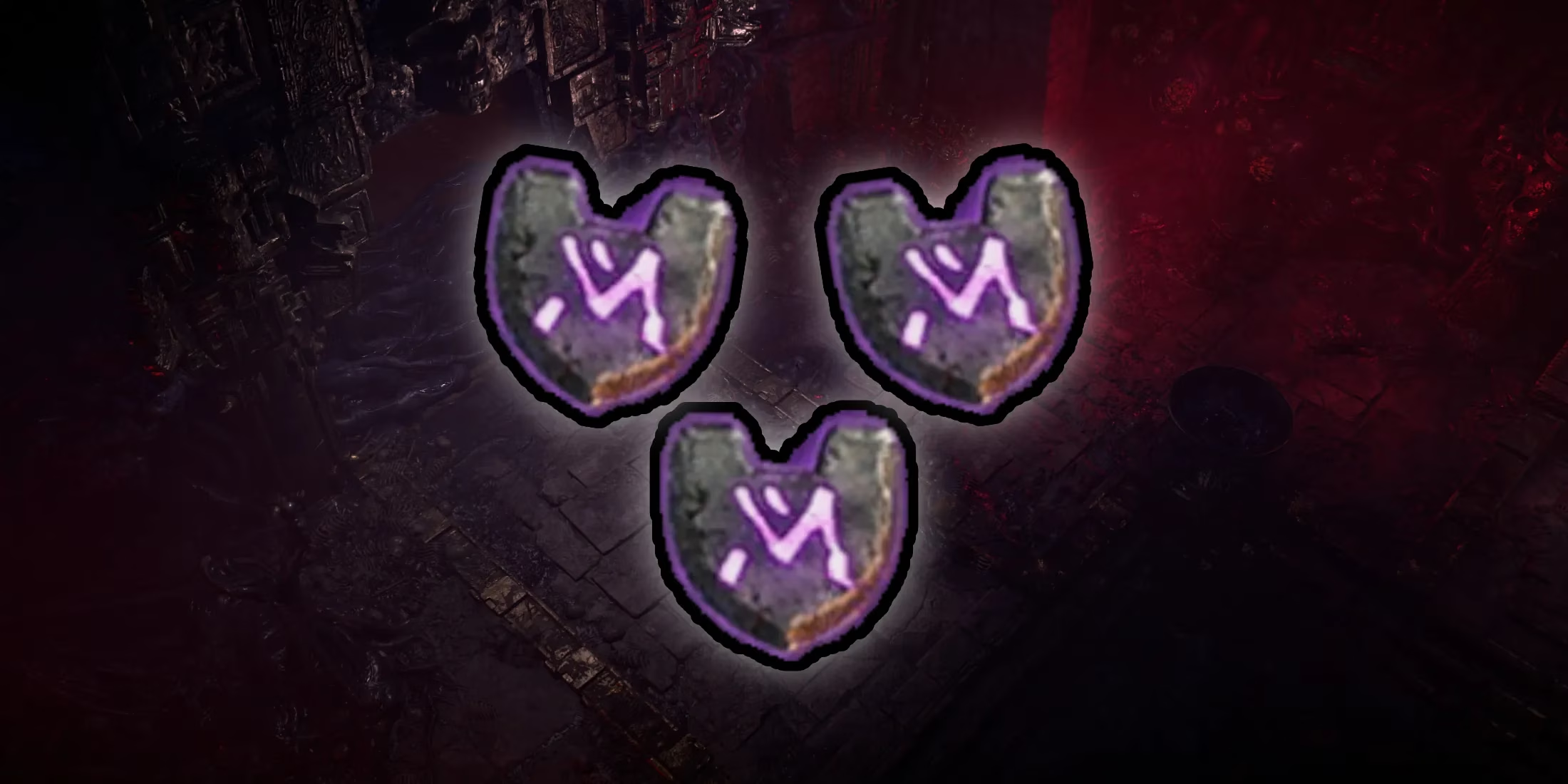
This is where the real magic happens. The Invocation Runes are the payoff. They have a deep, ominous purple glow and point downward, destined for the bottom socket. They are the sleeping dragon, waiting for the right tribute to awaken. Each one has an effect or grants a powerful ability, but it remains dormant until your paired Ritual Rune feeds it enough Offerings. Watching the purple buff icon on my bar fill up with Offerings became a rhythm to my combat—a visual metronome ticking toward a moment of unleashed power. The key lesson I learned early, often painfully, is synergy. Pairing a Ritual Rune that generates only a trickle of Offerings with an Invocation Rune that demands a flood is like trying to fill a canyon with a teaspoon; it's an exercise in frustration. You need a balanced pair where the generation rate can realistically meet the demand.
The system has layers I'm still peeling back. Some powerful Invocation Runes have a cooldown, preventing them from triggering more than once every second or, for the truly potent ones like class skill grants, every six seconds. Then there's the brilliant mechanic of Overflow. For certain runes, generating more Offerings than required doesn't just waste them. Instead, it supercharges the effect, making the resulting explosion of ice or wave of shadows that much more devastating. It rewards aggressive, efficient play in a way that feels incredibly satisfying.
And now, with the Season of Witchcraft in full swing, the meta has been deliciously shaken up. Blizzard added three brand new Runewords to chase: Nagu, Igni, and Chac. Their names alone send a chill down my spine, promising new and twisted powers to harness. But it's not just about the new toys. The developers also rebalanced 15 of the original Runewords from Vessel of Hatred. This means old reliable combinations might feel different, and previously overlooked runes could now be secret gems. The landscape of power has shifted, and we're all exploring it anew.
My Personal Runeword Breakdown & Tips
Based on my countless hours of testing (and more than a few disastrous combinations), here's a quick guide to getting started:
| Component | Role | Socket | Key Trait |
|---|---|---|---|
| Ritual Rune | The Trigger / Generator | Top | Generates Offerings on specific actions. |
| Invocation Rune 🟣 | The Effect / Payoff | Bottom | Consumes Offerings to activate a power. |
Crucial Mechanics to Remember:
-
The Pact is Everything: Your Ritual and Invocation runes must be a matched pair. Read their descriptions carefully!
-
Watch the Buff Bar: Your active Invocation Rune's progress is tracked by a purple buff icon. It's your combat HUD.
-
Cooldowns are Key: Don't build around a powerful effect that triggers every 6 seconds if your playstyle is all about rapid, machine-gun attacks.
-
Seek the Overflow: For runes that support it, pushing beyond the requirement isn't greedy—it's optimal.
-
Season 7 is a New Game: The new runes (Nagu, Igni, Chac) and the balance changes mean you should re-evaluate your old favorites. What was weak might now be strong! 💪
For me, mastering Runewords has been like learning to compose music for a chaotic orchestra. The Ritual Rune is the conductor's baton, setting the tempo with each Offering generated. The Invocation Rune is the crescendo, the moment the entire symphony crashes together in a wave of destructive harmony. And with the Season of Witchcraft, it's as if three new, mysterious instruments have been added to the ensemble, changing the sound of the entire piece. It’s a deep, rewarding system that turns every piece of gear with two sockets into a potential cornerstone of your power fantasy. The hunt for the perfect pair—a Ritual Rune that sings in time with my playstyle and an Invocation Rune that unleashes a cataclysm on my command—is what keeps me plunging back into the depths of Sanctuary. It’s no longer just about finding a better sword; it’s about forging a covenant with the very hatred we fight against, and bending it to our will.