
In 2026, I revisited Diablo 4’s Season 5 Hellbreaches with the benefit of hindsight, and the activity still stands out as a compact lesson in risk-reward endgame design. The seasonal loop is no longer the newest content on the calendar, but as a player reporting back from the field, I found that its core choices remain easy to understand and surprisingly tense: clear a short dungeon, stack Burning Aether, pick a harder challenge, and decide whether the final boss is worth the danger. For anyone tracing how Diablo 4 has evolved, Hellbreaches are a useful benchmark rather than a current-season headline, and they still show how seasonal activities can turn repeatable runs into a series of meaningful gambles.
Finding the Three Hellbreaches
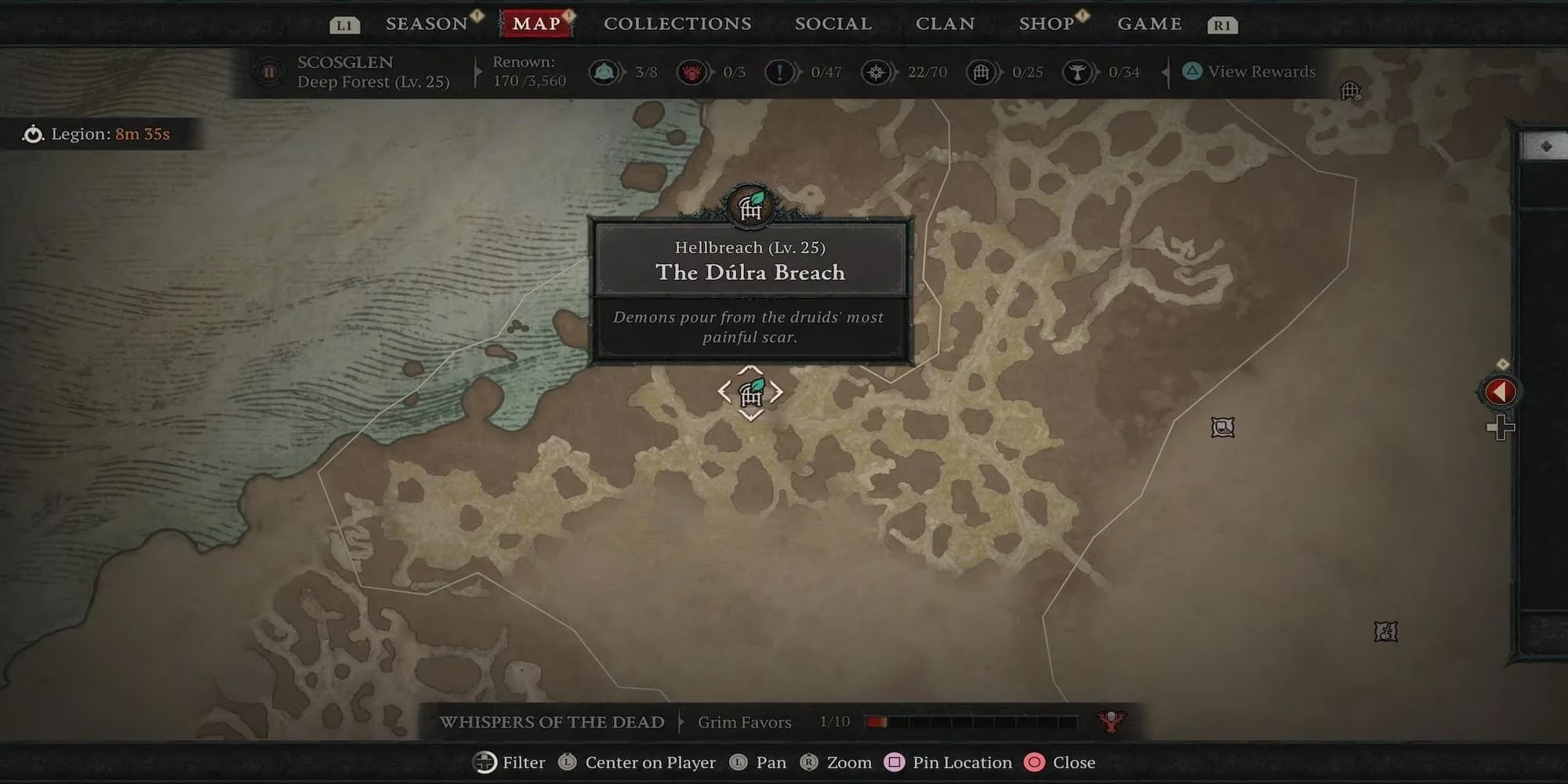
Hellbreaches appear in set locations throughout the world, and their map icon is that of a usual dungeon with an additional green seasonal leaf. While I was zoomed out, the icon appeared only as a green dot, which made it easy to miss during a quick map scan. There are three Hellbreaches in the game, and I found them in the following regions:
| Region | Zone | My Field Note |
|---|---|---|
| Scosglen | Deep Forest | A straightforward route that fits the gloomy woodland atmosphere |
| Kehjistan | Gae Kul | A useful stop when my build was already tuned for high burst damage |
| Dry Steppes | Chambatar Ridge | A reminder to check the map carefully before riding past |
Because Hellbreaches can be done as many times as I want, they fit neatly into a repeatable post-game routine. They also offer strong rewards for players willing to take on the more difficult challenges, which is why I treated each run as a small risk assessment rather than a mindless clear. The activity feeds into seasonal rewards and Mother’s Gifts, so the incentive is not only loot but also broader seasonal progress.
Inside the Three-Section Structure
Once inside, I found that Hellbreaches are broken into three sections. The first section has a goal, such as defeating a specific enemy, and rewards Burning Aether. After completing that goal, I had to choose a challenge to add to the second section. That choice also rewarded additional Burning Aether depending on the challenge I selected. In practice, this created an early fork: play it safe for a modest payout or accept more pressure for a larger stack.
The second section plays out mostly the same, with another goal usually similar to the first, plus whatever challenge I picked. This is where the run began to feel like a negotiation between my build’s survivability and my appetite for rewards. A challenge that looked trivial on paper could become dangerous when combined with elite packs, ground effects, and resource pressure. I learned to read the room before committing, especially when my character was still missing a key defensive layer.
The third section is usually a boss fight, and before entering I had to choose how strong the boss would be. I only had one chance to fight the boss, and I could do so against the boss’s base stats or against a version that deals increased damage for much more Burning Aether. That option demanded a strong build and gear; in 2026, I would describe it as a clear test of damage windows, cooldown discipline, and recovery tools. The harder boss is not a free bonus. It is a deliberate escalation, and the activity makes that trade-off explicit.
Spending Burning Aether Before Leaving
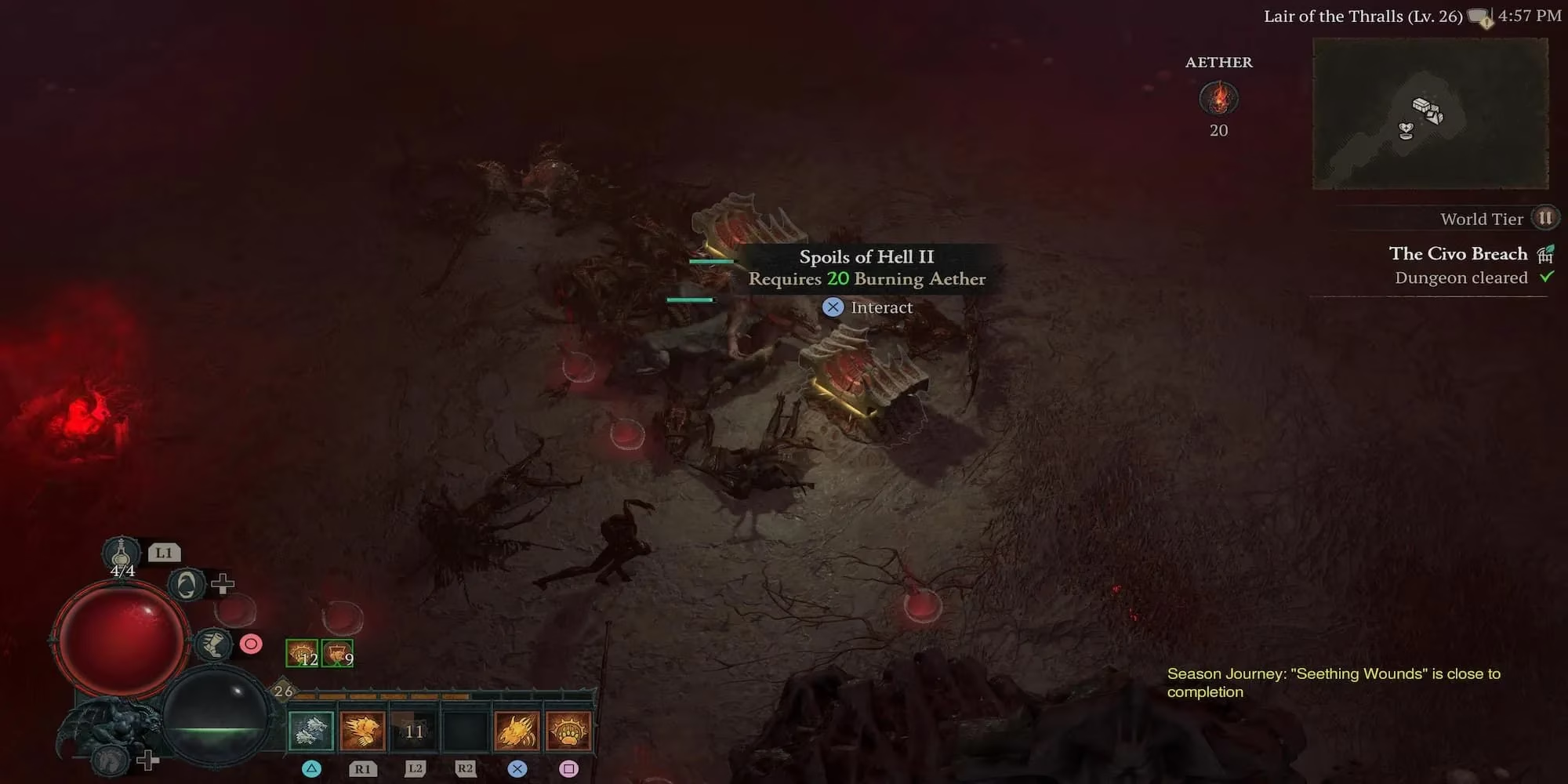
At the end of the Hellbreach, I was able to spend my Burning Aether on one of three chests. The Spoils of Hell II chest is the most expensive and also has the best rewards. It requires the maximum amount of Burning Aether, and I could only open it if I took on the hardest challenges of the Hellbreach and survived. That structure mirrors the reward logic of difficult Nightmare Dungeons: the best payout is reserved for players who accept the most demanding version of the content and then execute cleanly.
My Burning Aether could and should be spent however I wanted, because after leaving the Hellbreach those Aether disappear. They only exist within that run. That run-local currency design is important. It discourages hoarding and forces a decision at the end of every Hellbreach: spend now on a safer chest, or push for the maximum and aim for Spoils of Hell II. I found that the most efficient approach was to decide my target chest before entering the final section, then choose boss difficulty and earlier challenges with that target in mind.
What I Took Away
For a 2026 player looking back, Hellbreaches remain a neat example of Diablo 4’s seasonal design philosophy: short repeatable dungeons, layered difficulty choices, and a reward currency that vanishes if you leave. The activity rewards preparation and punishes overconfidence, but it also gives players room to choose their own risk level. My advice is simple: check the map for the green leaf icon, enter with a build that can handle at least one extra challenge, and never assume the hardest boss is worth it unless your gear supports the attempt. Hellbreaches are not the newest seasonal loop in 2026, but they are still a useful reference point for how optional endgame content can make every run feel like a decision rather than a formality.