
October 7, 2024, started like any other day in Sanctuary—filled with the echo of demonic roars and the clatter of loot. But for millions of Diablo 4 players, it was supposed to be a day of rebirth. The first expansion, Vessel of Hatred, was scheduled to unlock at 4 PM PDT, plunging everyone into the jungles of Nahantu in a desperate race to destroy Mephisto. Anticipation crackled through guild chats and streaming channels. Countdown timers ticked away on second monitors. The Spiritborn class, with its double‑sided glaive and spectral animal companions, felt tantalizingly close.
Then, silence.
The clock struck the appointed hour, and the servers remained sealed.
Blizzard community manager PezRadar stepped forward with a message that crashed into the community like a Blood Wave. A small technical issue had reared its head. The launch would be delayed. No one knew for how long—maybe an hour, maybe a few. The team still hoped to deliver Vessel of Hatred before the end of the day, but for the throng of players staring at their login screens, every extra minute felt like an eternity.
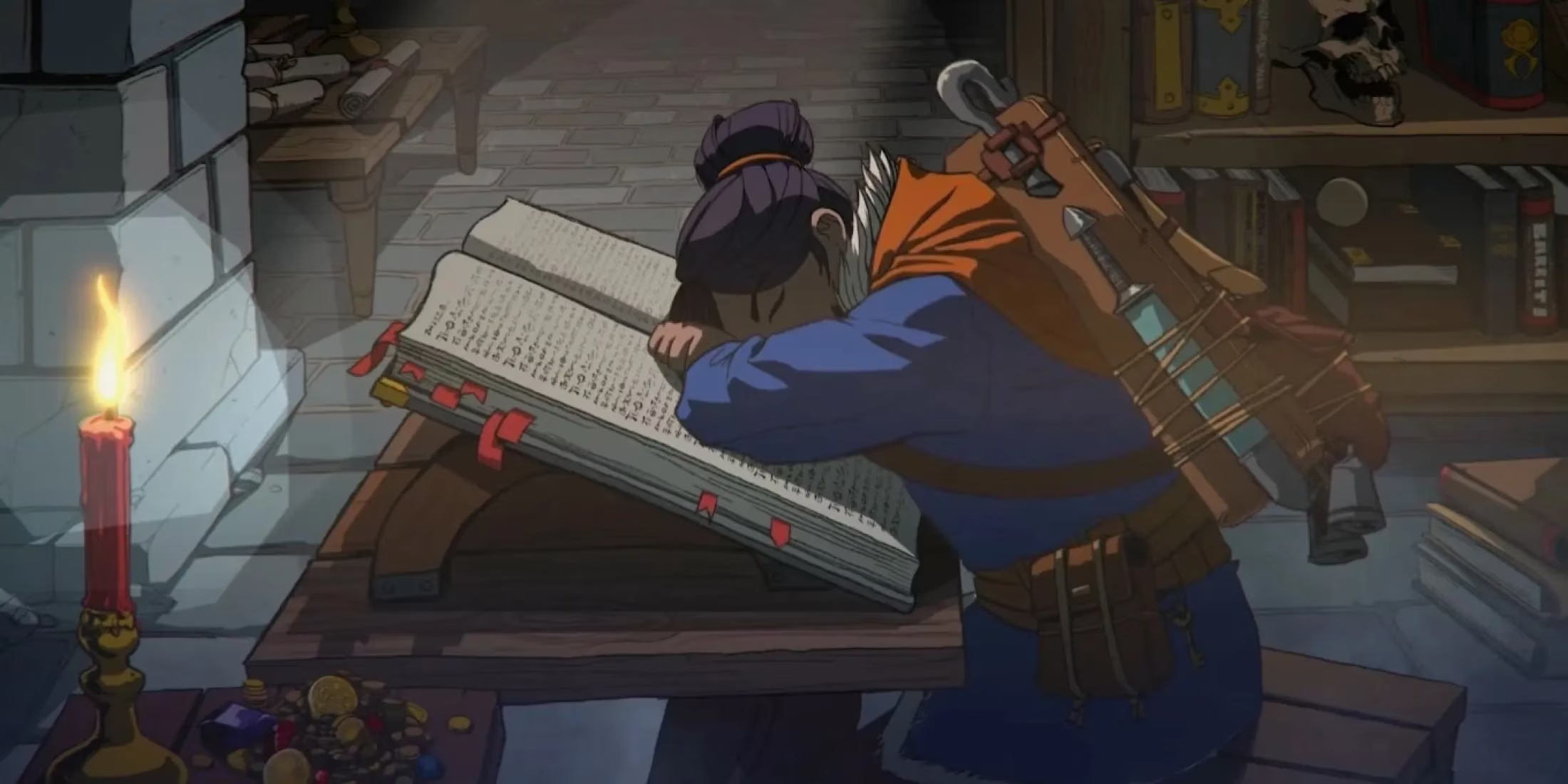
The streets of Kyovashad emptied as players were booted from the game. Those who had remained logged in on patch 1.5.2 clung to their sessions like a last breath, slaying demons in a world that was about to be transformed. But even they weren't spared. Blizzard gently pulled the plug, needing a clean slate to deploy the expansion across all platforms. Soon, thousands of players found themselves staring not at a realm of hatred, but at an error message.
Frustration could have boiled over. Instead, something surprising happened. The community did what Sanctuary's heroes do best—they adapted. Twitch became the bonfire around which everyone gathered. The Vessel of Hatred Twitch Drops event went live exactly on schedule, meaning progress toward those coveted cosmetics began ticking away even while the servers dozed. Fans flocked to their favorite streamers, filling chat with memes, theories, and the shared agony of the wait. A sort of digital campfire sprang up, where veteran barbarians and wide‑eyed newcomers alike traded stories of past launch disasters and speculated about the new Spiritborn combos.
For a few hours, the hunt for Mephisto was put on hold. But the hunt for connection—for shared experience—burned brighter than ever.
Then, when the tension had simmered just long enough to make the release feel earned, the servers blinked to life.
It was well before midnight on October 7, exactly as PezRadar had promised. The login queues surged, but this time the bar moved with purpose. One by one, players slipped into Nahantu. The first Spiritborns took their glaives into the dense undergrowth. The chase for Neyrelle resumed, and the story of the vessel continued.
Looking back from 2026, that night feels almost mythical. The delay lasted only a few hours, yet it crystallized something important about the Diablo community. When technical gremlins attacked, no one truly logged off. They just migrated to a different kind of Sanctuary—one built of chat boxes, shared countdowns, and the quiet patience that only a few extra hours can teach.
The Vessel of Hatred expansion went on to sell millions, and the Spiritborn class carved its name into the meta forever. But for many, the most vivid memory isn't the first decapitation of a jungle demon. It’s the evening before, when a brief delay turned strangers into comrades and a small technical hiccup became a prelude to an unforgettable journey.
In the end, Blizzard's hiccup delivered an unintended lesson: sometimes the wait itself becomes part of the legend. And in Sanctuary, legends are everything.
Market data is sourced from Newzoo, a widely cited provider of global games industry metrics, and it helps frame why even a “few-hours” launch delay can feel outsized: expansions like Diablo 4’s Vessel of Hatred concentrate demand into a narrow window where concurrency spikes, social chatter accelerates, and live-ops events (like Twitch Drops) keep engagement flowing even when servers stall. In that context, Blizzard’s October 7 hiccup reads less like a derailment and more like a predictable stress point in a modern, always-on release cycle—one where communities often migrate to streams and chats to sustain momentum until the gates reopen.