
In the ever-evolving landscape of 2026, the Action RPG genre continues to captivate players by offering more than just epic narratives and sprawling worlds; it provides a canvas for personal identity through gameplay. The true magic lies not in the quests themselves, but in the myriad ways a player can choose to undertake them. From the god-touched halls of the Underworld to the monster-infested wilds of the New World, these games have perfected the art of turning a simple character choice into a distinct and deeply personal adventure. The class or playstyle a player selects becomes the lens through which the entire world is viewed, transforming combat from a repetitive chore into a dynamic ballet of strategy and skill, where every decision feels as weighty as choosing a path in life itself.
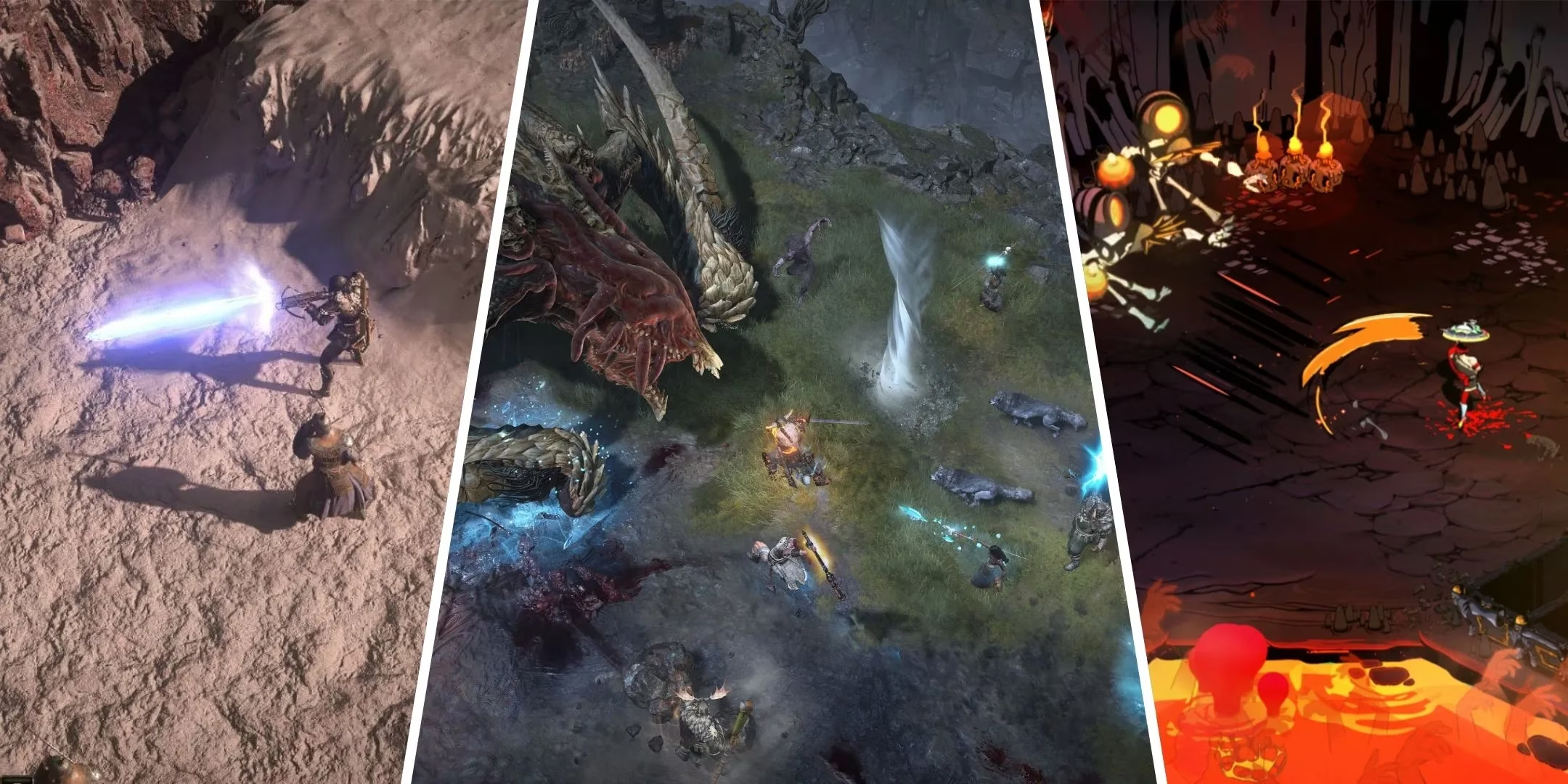
One of the most celebrated examples of this philosophy is Hades. While it forgoes traditional classes, its system of Infernal Arms functions with the same transformative power. Each weapon Zagreus wields—be it the relentless Stygian Blade or the calculating Adamant Rail—fundamentally rewrites the rules of engagement. The boons from the Olympian gods don't just add power; they interact with the weapon's core mechanics like a master chef pairing unexpected ingredients, creating a unique flavor of combat with every escape attempt. Mastering all weapons is a monumental task, as the procedural nature of each run ensures that no two builds are ever identical. For the player seeking relentless, fast-paced variety, Hades remains a pinnacle of the genre, proving that depth can emerge from elegant simplicity.
Other games build vast, intricate systems upon this foundational idea. Kingdoms of Amalur: Reckoning offers a class system as fluid as water, allowing players to seamlessly blend the brute strength of the Warrior, the arcane artistry of the Mage, and the cunning precision of the Rogue. This isn't merely picking a preset; it's crafting a personal combat style from a palette of deadly possibilities. The game's Destiny system acts as a rewarding feedback loop, granting powerful bonuses that encourage further experimentation with talent combinations. When combined with a deep crafting system for weapons and armor, the experience becomes a journey of continuous self-reinvention, where the player's evolving playstyle is the true protagonist.
The class systems in these games are not static choices but living ecosystems. Dragon's Dogma 2 exemplifies this with its Vocation system. Starting with foundational roles focused on melee or magic, players can eventually unlock Advanced Vocations that are like chemical compounds, fusing multiple combat philosophies into potent new forms. A Mystic Spearhand, for instance, blends martial prowess with telekinetic control, creating a playstyle that feels entirely novel. This design philosophy ensures that a player's strategic approach must adapt and grow throughout their journey, making character progression feel genuinely transformative.
No discussion of class identity is complete without the titan that defined it: the Diablo franchise. In Diablo 4, the choice between a Necromancer commanding legions of the dead, a Rogue dancing through shadows, or a Barbarian unleashing primordial rage isn't just a selection of skills—it's a choice of world view. Each class offers a completely distinct sensory and tactical experience, a principle so core to the series' DNA that it has become the gold standard against which others are measured. This is supercharged by deep skill trees and gear systems that allow for near-infinite customization within each archetype, ensuring that even two Necromancers can feel wildly different.
Taking clear inspiration from this legacy, Path of Exile 2 doubles down on complexity and player agency. Its class system begins with classic archetypes but quickly blossoms into specialized Ascendancies, granting monumental power and further defining a character's role. This is all supported by the game's legendary, galaxy-spanning passive skill tree—a labyrinthine map of possibilities that allows players to sculpt their avatar into a precise instrument for direct combat, area control, or team support. The sheer volume of combinations between skills, gear, and passive nodes makes character building in Path of Exile 2 an engaging puzzle with a near-infinite number of solutions.
Some games use their class systems to redefine genres. Stranger of Paradise: Final Fantasy Origin merges punishing soulslike combat with a surprisingly deep Job system. With 28 jobs ranging from basic to expert tiers, the game becomes a playground for tactical experimentation. The ability to switch jobs mid-combat is a stroke of genius, allowing players to adapt their strategy on the fly—shifting from a defensive Knight to an offensive Berserker as seamlessly as changing the channel. This flexibility, set against a challenging combat backdrop, creates a uniquely dynamic and personalized experience.
Even newer entries understand the value of focused choice. Dragon Age: The Veilguard, while streamlining some series traditions, retains a strong core identity through its three main classes: Mage, Warrior, and Rogue. Each provides a fundamentally different way to experience the game's dynamic combat. Through unique specializations unlocked via story progression and expansive skill trees, these initial choices branch out into nuanced playstyles, allowing for significant customization within a more curated framework.
For those who crave near-total freedom, Grim Dawn stands as a masterclass in modular design. Its genius lies in the dual-class system, where players choose a primary and later a secondary class from six options, leading to 45 possible combinations. This isn't just additive; it's multiplicative. Combining a Demolitionist with an Inquisitor doesn't just give you a character with two sets of skills—it forges an entirely new archetype, the magical gunslinger, complete with its own synergies and playstyle. The intuitive skill trees feed into this, making Grim Dawn a paradise for theory-crafters and a game with staggering replayability.
Trials of Mana brings a vibrant, real-time energy to class-based combat. Its system allows each character to choose between Light and Dark evolution paths, effectively letting the player guide their party's moral and mechanical development. This choice unlocks exclusive abilities and strategies, adding significant depth and encouraging multiple playthroughs to experience every narrative and combat permutation. The need to strategically leverage each character's unique class skills against formidable bosses turns combat into a coordinated team effort.
Finally, Monster Hunter World demonstrates that a profound class identity doesn't even require a traditional class. Its fourteen weapon types each represent a self-contained combat philosophy. The methodical patience of the Great Sword user, the acrobatic precision of the Insect Glaive wielder, and the strategic placement of the Gunlance fighter are as distinct as any classic fantasy archetype. Mastering a weapon is like learning a new language, with its own vocabulary of combos, defensive maneuvers, and positioning requirements. The freedom to change weapons at will, coupled with gear progression tailored to each playstyle, ensures the hunt never grows stale.
| Game | Core Class/System Philosophy | Key Feature for Variety |
|---|---|---|
| Hades | Weapon-Based Archetypes | God Boons creating unique, run-specific builds |
| Kingdoms of Amalur | Fluid, Hybrid Class System | Destinies that reward talent combination |
| Dragon's Dogma 2 | Evolving Vocations | Advanced Vocations that blend multiple styles |
| Diablo 4 | Deep, Iconic Archetypes | Extensive skill & gear customization within each class |
| Path of Exile 2 | Ascendancy Specialization | Massive passive skill tree enabling hyper-specialization |
| Stranger of Paradise | Dynamic Job Switching | Ability to change combat roles mid-fight |
| Dragon Age: The Veilguard | Focused Specialization | Class skill trees and narrative-unlocked specializations |
| Grim Dawn | Dual-Class Combinations | 45+ multi-class combinations creating new archetypes |
| Trials of Mana | Path-Based Evolution | Light/Dark class paths for each character |
| Monster Hunter World | Weapon as Class | 14 distinct weapons, each a masterable playstyle |
In the end, the greatest strength of the modern Action RPG is this commitment to player expression. Whether through the elegant chaos of a Hades run, the calculated synergy of a Grim Dawn build, or the mastered rhythm of a Monster Hunter weapon, these games understand that the most powerful tool they can give a player is agency. The class is more than a set of stats; it is the player's signature on the world, a declaration of how they choose to face its challenges. This diversity ensures the genre remains not just a collection of games to play, but worlds to live in, repeatedly, each time as a slightly different version of oneself. 🗡️🛡️⚔️